

TL;DR:
- H4 treated pine is the benchmark timber for in-ground and outdoor structural applications across Australia, protecting against rot, termites and decay where lower treatment classes fall short.
- Rated under the AS1604 hazard class system, H4 treated timber suits fence posts, pergola posts, retaining walls and landscaping projects with constant ground contact.
- Treatment class (H4) and structural grade (like MGP10 timber) measure different things, always check both marks before buying.
- Installed correctly, H4 pine can last decades outdoors, while remaining a more sustainable choice than many hardwood alternatives.
Introduction
If you’ve ever pulled up a fence post a few years after installation and found it soft, crumbling or riddled with termite damage, you already understand why timber selection matters. H4 treated pine has become the go-to choice for outdoor structural timber in Australia, engineered to withstand the conditions that cause premature failure: moisture, soil contact, fungal decay and termite attack.
Choosing the wrong timber for an outdoor structure can lead to costly failures down the track, from rotting fence posts to structural collapse in retaining walls or pergolas. Getting the treatment class right protects your investment, whether you’re specifying materials for a client or planning a landscaping project at home.
What is H4 treated pine?
In Australia, timber treatment is classified under the AS1604 hazard class system, which rates timber by the level of risk it’s designed to withstand. Classes range from H1 (protected, interior use) through to H6 (marine applications). If you’re unfamiliar with the system, our guide to understanding timber hazard classes breaks it down further.
H4 sits at the level required for outdoor structural timber that will be in-ground or in constant contact with soil and moisture — fence posts, pergola footings and landscaping timber. To reach this rating, pine is pressure-treated with preservatives such as Copper Chrome Arsenate (CCA) or similar approved compounds, forcing the treatment into the timber’s cell structure rather than just coating the surface.
Within our own range, Terraframe is treated with Micronised Copper Azole (MCA), a safer alternative to CCA that doesn’t contain arsenic, making it suitable for sensitive environments such as veggie patches, schools and playgrounds where CCA-treated products aren’t recommended.
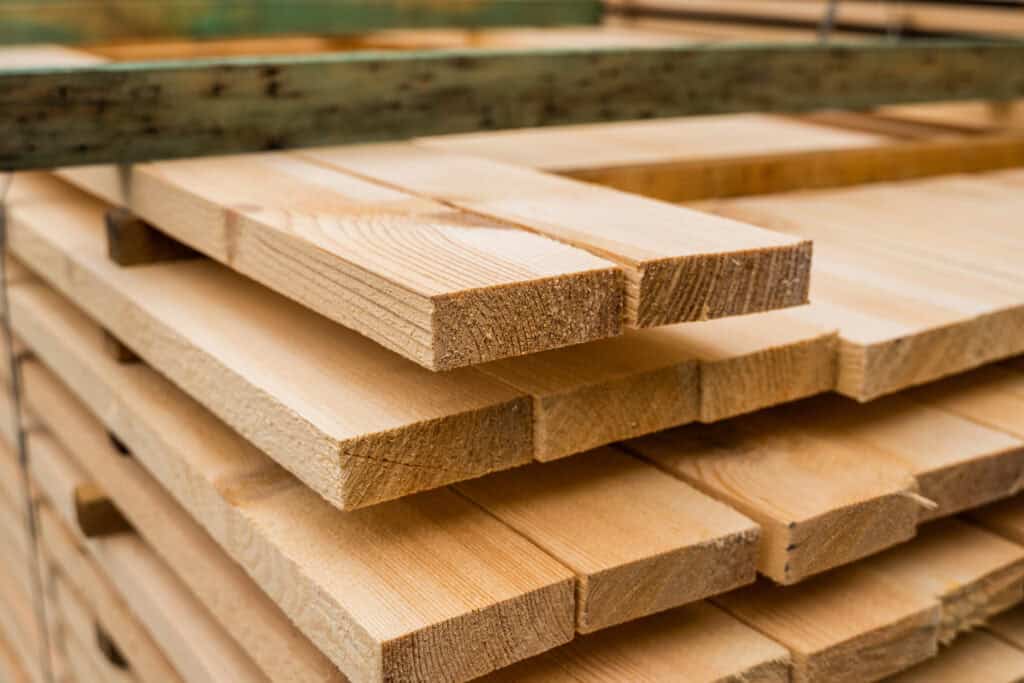
Why H4 timber is built for the Australian environment
Australian conditions place real demands on outdoor structural timber. Harsh UV exposure, high termite activity and seasonal moisture swings all accelerate the breakdown of timber that isn’t adequately treated. In many parts of the country, using H3 where H4 is required isn’t just a durability risk, it’s a compliance issue.
Treatment doesn’t affect a piece of timber’s structural strength or load-bearing capacity. But selecting the wrong class can lead to premature decay and, eventually, structural failure, regardless of how strong the timber was when installed.
H4 pine vs other outdoor timber options
Compared with hardwoods, composites and lower-grade treated pine, H4 pine offers the best balance of structural performance, cost-effectiveness and workability for most outdoor structural applications, and is easy to cut, drill and fix on-site.
H4 pine is also a more environmentally conscious choice than many hardwoods, as it’s plantation-farmed rather than harvested from old-growth forests.
What is H4 treated pine timber used for? Key applications
H4 treated pine suits outdoor applications where timber sits in direct or prolonged contact with the ground or moisture, including:
- Fence posts and boundary structures
- Pergola posts (in-ground)
- Retaining walls and garden sleepers
- Landscaping timber and garden edging
- Greenhouse and outdoor shed framing
- Play equipment foundations
- Outdoor structural frames in contact with soil or continual moisture
Each application benefits from H4 because it involves sustained ground contact or moisture exposure that a lower hazard class isn’t built to handle long-term.
H4 pine and structural grading: understanding MGP10 timber
Not all H4 pine is the same. Treatment class and structural grade measure two different things, and confusing them is a common, costly mistake.
The H class tells you what the timber has been treated to resist decay, termites, and moisture. Structural grading measures stiffness and strength instead. MGP (Machine Graded Pine) ratings, such as MGP10 timber, describe how timber performs under load. MGP10 is a common structural grade for residential construction, suitable for wall framing, rafters and outdoor structural applications where load-bearing performance matters.
When buying, check both marks: the treatment stamp for the H class, and the grading stamp for the structural rating. Timber can be correctly treated to H4 but graded incorrectly for a load-bearing job, or vice versa.
How long does H4 treated pine last outdoors?
Installed and maintained correctly, H4 treated range, Terraframe, is backed by a 50 year warrenty. A few factors influence longevity, including correct installation that avoids unnecessary end-grain exposure to moisture, post-installation sealing or coating, good drainage and site conditions, and regular inspection for cracking or wear at ground level.
Treatment protects timber against biological hazards like termites and fungal decay, but it doesn’t prevent weathering. Therefore, a coating or sealant is still recommended.
How to choose the right H4 timber for your project
A few questions will help you specify the right timber for the job:
- Is the timber going in-ground or in contact with soil or moisture?
- H4 is the minimum requirement.
- Does the application involve structural load-bearing?
- Check the MGP or F-grade rating alongside the H4 treatment mark.
- Is the project a retaining wall or landscaping sleeper?
- H4 is generally the minimum, with H5 for more severe exposure.
Learning to read a treatment mark — the brand, preservative code and H class — helps you buy with confidence from reputable suppliers who provide compliant, properly marked timber.
Common mistakes when using outdoor structural timber
Even experienced builders trip up on timber selection. Common mistakes include:
- Using H3 timber in applications that require H4 is the most common, costly error.
- Failing to seal cut ends on-site, leaving the most vulnerable point exposed.
- Ignoring treatment marks and buying on price alone.
- Using the wrong structural grade for a load-bearing application.
- Not checking local termite risk zones before specifying a timber class.
Sustainability and H4 treated pine
A question we hear often is whether treated pine is an environmentally responsible choice. Generally, yes. H4 pine is typically sourced from fast-growing, plantation-grown pine — a renewable resource rather than a product of old-growth deforestation.
Treatment also extends the structural life of plantation timber considerably, allowing it to be used in demanding outdoor applications that would otherwise require old-growth hardwood, effectively providing the same durable performance without the same environmental footprint.
Where to buy H4 treated pine
Woodhouse Timber supplies H4 and H3 treated pine, MGP10 timber and our Terraframe range to hardware stores and building supplies merchants across Australia, so you can shop a wide variety of treatment classes and structural grades in one place. If you’re not sure which product suits your project, our team is on hand during business hours to talk through the application and help you sort the right timber, whether you need a small run of fence posts or a full pallet for a larger build. Ask your local store to check stock availability, or contact us directly for trade quantities.
Conclusion
H4 treated pine has earned its place as the standard for outdoor structural timber in Australia, offering a proven balance of durability, strength and value across fencing, landscaping, retaining walls and structural framing. Understanding the difference between treatment class and structural grade — and knowing where H4 is genuinely required — helps you avoid the costly mistakes that come from getting timber specification wrong.
At Woodhouse Timber, our team has over 40 years of experience supplying H3 and H4 treated pine, including our Terraframe range, to hardware stores, building supplies merchants and trade professionals across Australia. If you’re planning a project, explore our Terraframe range or get in touch with our team, we’re always happy to help you choose the right product for the job.